
Traffic tickets in Essex County can create consequences beyond the fine printed on a summons. Depending on the violation and your driving history, a case may involve Motor Vehicle Commission points, surcharges, insurance concerns, license suspension, or other penalties.
An Essex County traffic ticket defense lawyer with The Law Offices of Jonathan F. Marshall can review the summons, explain the potential consequences, examine the State’s evidence, and help you evaluate whether to contest the charge or pursue another resolution.
Most traffic cases are handled through local municipal courts, making our Essex County Municipal Court resource a useful overview of the court process.
Common Traffic Violations and New Jersey MVC Points

New Jersey assigns Motor Vehicle Commission points to many moving violations. The number of points depends on the specific offense.
Examples include:
- Two points for careless driving;
- Two points for failure to observe a traffic signal;
- Four points for improper passing;
- Five points for reckless driving;
- Five points for following too closely; and
- Different point totals for speeding depending on how far above the posted limit the motorist is alleged to have driven.
Our resource on New Jersey’s points schedule provides additional information about point assessments for common violations.
The effect of a ticket should be evaluated together with the driver’s existing record rather than looking only at the fine associated with the new charge.
Can MVC Points Be Reduced?
New Jersey provides several mechanisms through which points may be reduced from an MVC driving record under qualifying circumstances.
According to the State’s driver program information, point reductions may be available through periods of violation-free driving, approved defensive-driving courses, or certain Motor Vehicle Commission programs.
Those reductions do not necessarily eliminate the consequences of the underlying conviction, so timing and eligibility should be considered before relying on a point-reduction program as the solution to a new ticket.
Surcharges and the Financial Impact of Traffic Violations
Some motorists can face state surcharges in addition to the fine imposed by the municipal court.
New Jersey’s surcharge system can apply when a driver accumulates a qualifying number of points within a specified period, while certain convictions can create separate surcharge obligations.
The total financial impact of a traffic case may therefore include the court fine, statutory assessments, surcharges, insurance consequences, and other costs.
An Essex County traffic defense attorney can explain those issues before you decide whether to accept a proposed resolution.
DWI Charges in Essex County
Driving while intoxicated is handled in municipal court in New Jersey, but it carries a separate set of penalties and evidentiary issues from an ordinary traffic ticket.
Our Essex County DUI/DWI page explains more about DWI allegations, breath testing, field sobriety evidence, license consequences, ignition-interlock requirements, and other issues that may arise.
It is also important to distinguish DWI from a criminal offense. New Jersey treats DWI as a motor vehicle offense, although the potential consequences can still be significant.
When a Traffic Offense Can Carry Jail Exposure
Many traffic violations primarily involve fines and MVC consequences, but some offenses can also carry potential jail exposure depending on the statute and circumstances.
The source identifies DWI, reckless driving, certain leaving-the-scene allegations, and some driving-while-suspended cases as examples where incarceration can become an issue.
Our resource on driving while suspended provides additional information about that particular charge.
When jail exposure is possible, discovery, procedural defenses, prior history, and the precise statutory subsection charged become especially important.
Where Essex County Traffic Tickets Are Heard
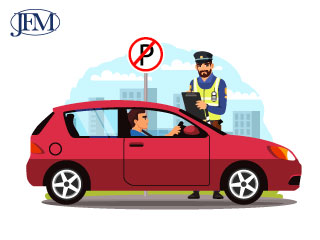
Most traffic and parking matters are handled by the municipal court serving the location where the alleged violation occurred.
The case may involve a local police officer, while violations occurring on certain state highways may involve the New Jersey State Police.
Municipal court proceedings can include discovery, conferences with the municipal prosecutor, motion practice, plea negotiations, and trial when the charge remains contested.
Some matters may also be addressed through NJMCDirect, although whether an online resolution makes sense depends on the charge and the consequences of the proposed disposition.
Negotiating Traffic Charges and Point Reductions
Some traffic cases may be resolved through negotiated amendments, but the available options depend on the evidence, driving history, charge, and applicable court rules.
A proposed resolution should be evaluated based on more than the number of MVC points alone. Fines, state assessments, surcharges, license consequences, commercial-driver concerns, and other effects may matter.
In some cases, an amendment to an offense carrying fewer or no MVC points may be considered. That does not necessarily mean the alternative carries no financial or other consequences.
Defense counsel can compare the proposed resolution with the original charge so you understand the full tradeoff before accepting it.
How We Review the State’s Evidence
Traffic cases can involve more evidence than the summons itself suggests.
Depending on the allegation, defense counsel may review:
- Body-camera or dash-camera footage;
- Radar or lidar records;
- Calibration and maintenance documentation;
- Officer training records;
- Intersection layouts and sight lines;
- Traffic-signal or lane information;
- Witness testimony; and
- Other records supporting the alleged violation.
The defense can compare that evidence against the officer’s observations and the elements of the offense to determine whether the State can establish the violation.
Speeding Ticket Evidence
A speeding case may involve questions about the method used to estimate or measure speed, the location of the officer, equipment records, visibility, traffic conditions, and whether the vehicle was properly identified.
More serious speeding allegations can also create additional point or license concerns. Our resource on speeding-related license suspensions provides more information about those consequences.
Defense counsel can review the supporting records before determining whether negotiation or trial is the better approach.
Reckless and Careless Driving Allegations
Careless driving and reckless driving are separate violations with different point assessments and legal standards.
The fact that an accident occurred or an officer believed a driving maneuver was unsafe does not automatically resolve every element of the charge.
Video, witness accounts, roadway conditions, vehicle movement, visibility, and the officer’s observations may all become relevant when the allegation is contested.
License and Commercial Driver Consequences
Drivers who already have points or prior suspensions may face different risks from someone with a clean driving history.
Commercial driver’s license holders can also face consequences that differ from those affecting ordinary passenger-license holders.
For that reason, the defense strategy should consider your complete driving record and how a proposed disposition may affect your license or employment.
Why Former Prosecutor and Trial Experience Can Matter
The Law Offices of Jonathan F. Marshall includes approximately 20 criminal defense attorneys with more than 200 years of combined experience.
Our team includes former county prosecutors, former municipal prosecutors, and certified criminal trial lawyers.
That background provides perspective on how municipal prosecutors may evaluate officer testimony, discovery problems, driving records, mitigation, and proposed resolutions.
Our attorneys use that experience to prepare the case based on the evidence and applicable law rather than relying on personal relationships with prosecutors, judges, or court personnel.
Speak With an Essex County Traffic Ticket Defense Lawyer
A traffic summons can involve more than a one-time fine. Points, surcharges, license consequences, insurance concerns, and future driving privileges may all be relevant depending on the violation.
The Law Offices of Jonathan F. Marshall can review the ticket, your driving record, available discovery, and the possible consequences before helping you determine how to proceed.
Use our online form to schedule a free case review with an Essex County traffic ticket defense lawyer.
Essex County Traffic Ticket FAQs
What point values apply to common New Jersey traffic tickets?
The number of MVC points depends on the offense. For example, careless driving carries two points, reckless driving carries five, and speeding points vary according to the alleged speed above the limit.
Where will my Essex County traffic ticket be heard?
Most traffic cases are heard in the municipal court serving the location where the alleged violation occurred.
Can a traffic ticket be reduced to a no-point offense?
Potentially. Whether an amendment is available depends on the evidence, charge, driving history, and applicable rules, and a no-point disposition may still carry fines or other consequences.
Can a traffic offense result in jail?
Some traffic and motor vehicle offenses carry potential jail exposure depending on the statute and circumstances, including certain DWI, reckless-driving, leaving-the-scene, and suspended-driving cases.
Is DWI a criminal offense in New Jersey?
No. New Jersey treats DWI as a motor vehicle offense, although it can carry significant license, financial, interlock, and other consequences.
Can radar or lidar evidence be challenged?
Potentially. Defense counsel can review equipment records, calibration and maintenance documentation, operator training, identification of the vehicle, and other evidence surrounding the alleged speed measurement.